
Space Waves - CrazyGames
CrazyGames.comArcade
4.6745.00 Reviews
- Version
- 1.7.5
- Installs
- 5.00M
- Age Rating
- Everyone
Screenshots
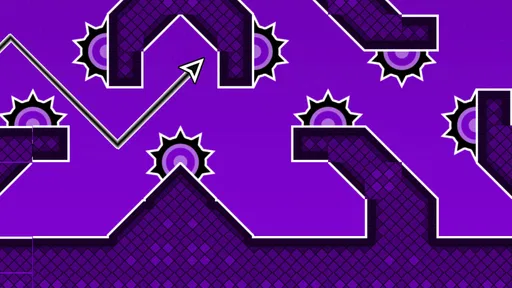
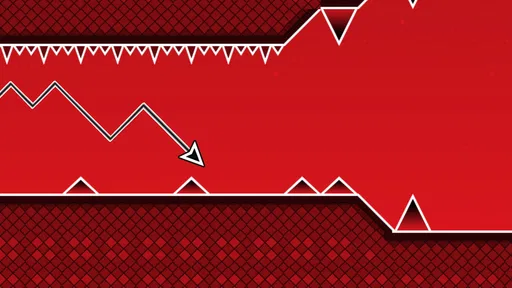
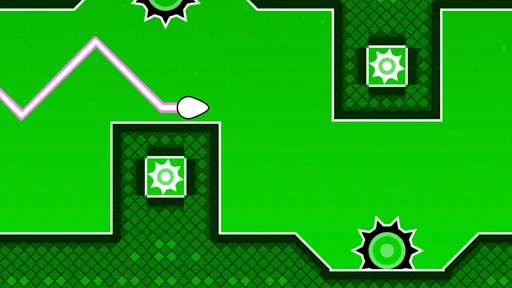
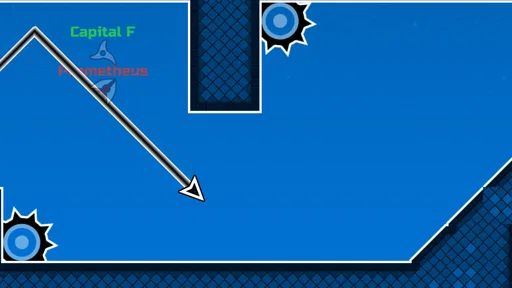
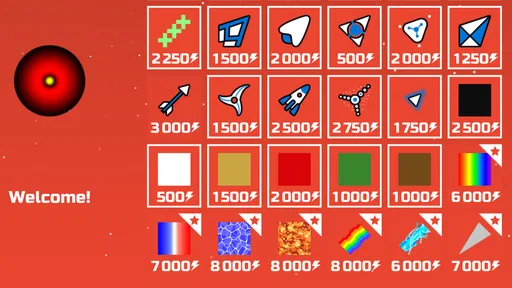
Our Review of Space Waves - CrazyGames
 Analysis by Appyee
Space Waves is the kind of arcade game I can open for a quick break and understand almost immediately. I guide an arrow through geometric courses, react to hazards, and try to keep a steady rhythm instead of relying on long explanations or complicated controls. That directness is its biggest appeal: the game asks for attention, not a large time commitment.
After spending time with it, I see a clear audience for this release from CrazyGames.com. It suits players who enjoy short reaction challenges, repeated attempts, and the small satisfaction of turning a difficult section into something familiar. It is less suitable if you want a story, character development, exploration, or a relaxed arcade experience that never punishes mistakes. This is built around concentration and correction.
What the first session feels like
The game presents itself as an arcade challenge with more than eighty geometric levels. That scale gives the experience a useful sense of direction, but I would not approach it as a traditional adventure with a narrative to follow. The real progression comes from learning how each course moves, identifying danger points, and gradually improving your reactions.
The visual language is intentionally simple. Shapes, lines, open space, and moving hazards do most of the communication. I found that helpful during the first few attempts because there is not much decorative material competing with the route ahead. At the same time, the clean presentation does not make the game easy. A sparse screen can make a sudden obstacle feel even more important because the eye has nowhere else to go.
My first meaningful goal would not be to clear a large portion of the game. I would aim to complete one level without rushing, then replay it and notice where my timing improved. That approach makes the early experience more reassuring. Instead of treating every failure as a sign that the game is too difficult, I can use each attempt to learn the shape of the course.
The game is free to download and is rated for Everyone, which makes it easy to recommend for a family device or for someone who wants a straightforward arcade title. Its free entry point is convenient, although in-app purchases ranging from $1.99 to $9.99 per item mean I would still check the purchase flow before handing the phone to a child.
What I would prepare before playing
I would begin in a quiet moment rather than while walking, commuting, or doing something that repeatedly interrupts attention. The controls may look simple, but the challenge depends on seeing an upcoming change and responding at the right instant. A poor connection between attention and timing can make the opening feel harder than it really is.
I also recommend holding the phone in a stable position and keeping the display clear of fingers. Small changes in grip can affect how confidently I react, especially when a course demands several corrections close together. This is a minor practical detail, but it matters more here than it would in a slower puzzle game.
There is no need to begin with a perfectionist mindset. A first run is useful even when it ends quickly because it shows where the route narrows, where the pace changes, and which visual elements deserve attention. I would rather finish a session knowing one section better than bounce between levels without learning anything from the attempts.
The listed minimum operating-system requirement is Android 7.1, while the current release is version 1.5.5. That makes the compatibility information easy to understand for many Android users, though I would still check the device’s available space and performance if it is an older phone. The game’s rating and install reach also suggest that it has found a broad audience: it carries a 4.6 average from around 38 thousand ratings and has passed 5 million installs.
Getting from installation to the first clear success
Once installed, I would treat the opening level as a tutorial I create for myself. I would first watch how the arrow responds to input rather than immediately trying to move at maximum speed. The important question is not simply “Can I react?” but “How early do I need to react for this particular shape?” That distinction becomes valuable as the routes become less forgiving.
My practical routine would be simple. On the first attempt, I would focus on recognizing the route. On the second, I would concentrate on one troublesome turn or obstacle. On the third, I would try to connect the improved section to the rest of the level. This turns repetition into a small training loop rather than a string of identical failures.
A useful habit is to keep my eyes slightly ahead of the arrow. Watching only the character makes every obstacle feel like a surprise. Looking toward the next section gives me a moment to prepare, especially when the geometry creates a predictable line through the course. I would not expect this to solve every challenge, but it makes the game feel more controllable.
When I finally clear a level, I would replay it once before moving on if the route taught me something important. That extra run helps separate luck from understanding. If the success came from a last-second correction, the replay shows whether I actually learned the timing. This is one of the more rewarding parts of the design: improvement is visible in how calmly I handle a section that initially felt chaotic.
For a first-time player, the best early milestone is not speed. It is reaching the end while making fewer emergency movements. A slower, deliberate run often gives me a better foundation for later levels than an aggressive attempt that succeeds only because every correction happened to work.
Where new players may misread the challenge
The most common confusion is assuming that a simple-looking course should be easy. The geometric style removes visual clutter, but it does not remove the need for timing. I would avoid judging the game after one rushed attempt. The challenge is closer to a reaction exercise than to a casual screen tapper, and that difference becomes clear only after repeating a section.
Another mistake is changing strategy after every failure. If I alter my movement, speed, and focus all at once, I cannot tell what helped. I prefer to change one thing at a time: look farther ahead, begin a turn earlier, or keep a steadier rhythm. That makes the retry informative, even when it still ends unsuccessfully.
It is also easy to confuse memorization with skill. Knowing that an obstacle is coming helps, but it does not automatically produce the correct response. A strong run combines memory of the route with attention to the arrow’s current position. If I rely only on remembering a sequence, a small error early in the level can disrupt everything that follows.
Short sessions are another point worth understanding. The game works well when I have a few spare minutes, but “quick to start” does not mean “effortless to finish.” A level can demand enough concentration that I need a pause afterward. That is a strength for players who enjoy focused bursts, but a limitation for anyone looking for something soothing after a tiring day.
The in-app purchase range is another reason to establish a personal boundary before playing. Since the game is free, I can begin without paying, but optional purchases can change how I think about continued play. I would avoid buying anything simply because a difficult attempt was frustrating. If I ever decide to spend, I would do so deliberately rather than treating a purchase as a substitute for learning the level.
How it compares with familiar arcade alternatives
Compared with endless runners, this game feels more structured because the main attraction is clearing designed courses rather than surviving as long as possible in one continuously changing run. That makes it easier for me to set a concrete goal: finish a particular level, improve a particular turn, or complete a clean replay.
Compared with rhythm games, it shares the need for timing but does not depend on music as the main guide for action. I have to read the geometry and anticipate movement instead of following a beat. Players who prefer audio-led cues may find other rhythm-focused games more satisfying, while players who enjoy visual prediction may prefer this approach.
It also differs from relaxed puzzle games. There is no sense that I can stop and examine a board at my own pace. The appeal comes from immediate decisions and repeated attempts. If I want a game for a waiting room where interruptions are constant, a turn-based puzzle would probably be a better choice. If I want to sharpen my attention for a short, focused session, Space Waves makes more sense.
The trade-off is that the game’s simplicity may become repetitive for players who need variety in mechanics, characters, or narrative rewards. Its strength is concentration; its weakness is that concentration is almost the entire experience. I would recommend it to someone who finds satisfaction in mastering a route, not to someone who expects every new stage to introduce a completely different style of play.
Who will get the most from it
I think it is a good fit for players who enjoy arcade games with immediate feedback and a clear retry loop. It can also work for someone returning to games after a long break because the basic idea is easy to grasp. The first useful success does not require learning a large ruleset; it comes from observing, adjusting, and trying again.
It is especially practical for short breaks. For example, if I have ten minutes before an appointment, I can play a few attempts without needing to remember a complicated story or rebuild a large world. The same session can still feel meaningful if I use it to solve one difficult passage rather than simply chasing a high score.
I would be more cautious about recommending it to players who dislike failure loops. Repetition is not a side activity here; it is the main way progress happens. Someone who wants a gentle game with constant forward motion may interpret the same design as frustrating. Likewise, people sensitive to fast visual movement should decide for themselves whether this style feels comfortable during longer sessions.
Parents may appreciate the Everyone content rating, but I would still explain the purchase option before letting a child play independently. The game’s accessible presentation does not necessarily mean every level will be equally easy for younger players. A child who enjoys persistence may have fun, while one who expects immediate success may need encouragement to treat failed attempts as practice.
My recommended path after the first level
After the first clear, I would resist the urge to race through the remaining stages. Instead, I would create a small personal progression: one newly completed level, one replay for cleaner movement, and then a break. This keeps the game from turning into a tense blur and makes it easier to notice whether my reactions are actually improving.
I would also pay attention to the kind of mistake I make. If I hit an obstacle because I looked too late, the solution is visual preparation. If I react too early, the solution is patience. If I lose control after a successful turn, the problem may be overcorrecting. Naming the mistake gives each retry a purpose and is more effective than simply tapping again immediately.
For longer-term play, I would use the level count as a menu of challenges rather than a demand to finish everything. Arcade games are often most enjoyable when I can stop after a satisfying improvement. The structure here supports that style because a single course can provide a complete session, while a longer run through several levels offers a larger challenge when I have more time.
One limitation I would keep in mind is that the experience may not offer enough variety for someone who needs a strong sense of discovery. The geometric presentation and reaction-focused design are consistent, which helps the game feel coherent but can also make extended sessions feel similar. I would alternate it with a slower puzzle or story game if I wanted a broader range of moods.
CrazyGames.com has positioned this as a free arcade game rather than a premium, feature-heavy release, and that framing feels accurate in use. The value comes from how well the central challenge holds my attention, not from a large collection of unrelated systems. The reported 639 reviews and broad player adoption give it a substantial public footprint, but my recommendation still depends on whether I enjoy this particular form of repetition.
My final take for a first-time player
I would recommend Space Waves if you want a free, focused arcade game that gets to its main challenge quickly. Start slowly, look ahead of the arrow, and treat the first few failures as information. Your first meaningful success will probably come sooner if you study one section instead of trying to conquer an entire level in a single heroic attempt.
I would skip it if your ideal mobile game is story-driven, relaxing, or generous with mistakes. The clean visuals and simple premise hide a demanding reaction loop, and that can feel either satisfyingly precise or unnecessarily tense depending on your taste.
For me, the strongest reason to keep it installed is the ease of returning to a specific challenge. I can play briefly, identify one timing problem, and leave with a clear sense of what to try next time. That makes it more useful than a disposable time-filler, even though its focused design will not appeal to everyone.
My advice is to judge it by the quality of one careful retry, not by the frustration of the first miss. If that process feels rewarding, the many geometric courses can provide a dependable stream of compact arcade challenges. If it feels like work after a few attempts, another genre will probably serve you better.
Privacy and Permissions
See what permissions an app requests and how it handles your data.
- Wi-Fi connection information
- view Wi-Fi connections
- Other
- view network connections, full network access, control vibration, prevent device from sleeping, Google Play license check
Verdict
Strengths of Space Waves - CrazyGames
- Fast-paced levels are easy to start but offer plenty of challenge.
- Simple one-touch controls work well on both phones and tablets.
- Short stages make it ideal for quick gaming sessions.
- Bright visuals and energetic effects keep the gameplay engaging.
- Playable directly in a browser without a large installation.
Limitations of Space Waves - CrazyGames
- Difficulty can increase sharply, causing repeated failures.
- Some sections require very precise timing and memorization.
- The gameplay may feel repetitive after extended sessions.
- Requires an internet connection when played through CrazyGames.
- Frequent retries may become frustrating for casual players.
Other Releases by CrazyGames.com
View All
Ragdoll Archers - CrazyGames
Arcade4.5
Similar Picks in This Category
View All
Subway Surfers
SYBO Games4.6

Stickman Party 234 MiniGames
PlayMax Game Studio4.6

Subway Princess Runner
Ivy4.4

Temple Run
Imangi Studios4.2

Zombie Tsunami
Mobigame SAS4.6

Stack Ball - Crash Platforms
CASUAL AZUR GAMES4.5
Frequently Asked Questions
What is Space Waves - CrazyGames?
Space Waves is a fast-paced arcade game available through CrazyGames, where you guide a small spaceship through dangerous, obstacle-filled levels. The main challenge is controlling the ship’s movement while avoiding walls, spikes, and other hazards. Its simple controls are easy to understand, but the timing-based gameplay becomes increasingly demanding as you progress through each stage.
How do you play Space Waves?
Gameplay is based on controlling the spaceship’s vertical movement while it automatically travels forward. Depending on the platform, you generally tap, click, or press a key to make the ship rise, then release it to descend. Successful runs require careful timing, quick reactions, and learning the layout of each level. Touching an obstacle usually ends the attempt immediately.
Is Space Waves free to play on Android or iPhone?
Space Waves is primarily offered as a browser game through the CrazyGames platform, so it can usually be played for free without purchasing the game. Availability may depend on your device and browser rather than a traditional Android or iOS app installation. Before downloading anything, check whether the official CrazyGames page provides a supported mobile version or simply runs the game online.
Does Space Waves require an internet connection?
Because Space Waves is hosted through CrazyGames, an internet connection is generally required to open the game, load its content, and access the browser-based experience. It is not normally designed as a fully offline title. Performance can also depend on your browser, connection quality, and device, so closing unnecessary tabs may help if the game feels slow or unresponsive.
Is Space Waves suitable for children and casual players?
Space Waves is easy to understand and does not require complicated gaming knowledge, making it approachable for casual players and older children. However, the game relies on precision, repetition, and quick reactions, so younger players may find later sections frustrating. Parents should also review the CrazyGames website experience, including advertisements and other available content, before allowing children to play.
Play our best games!


